
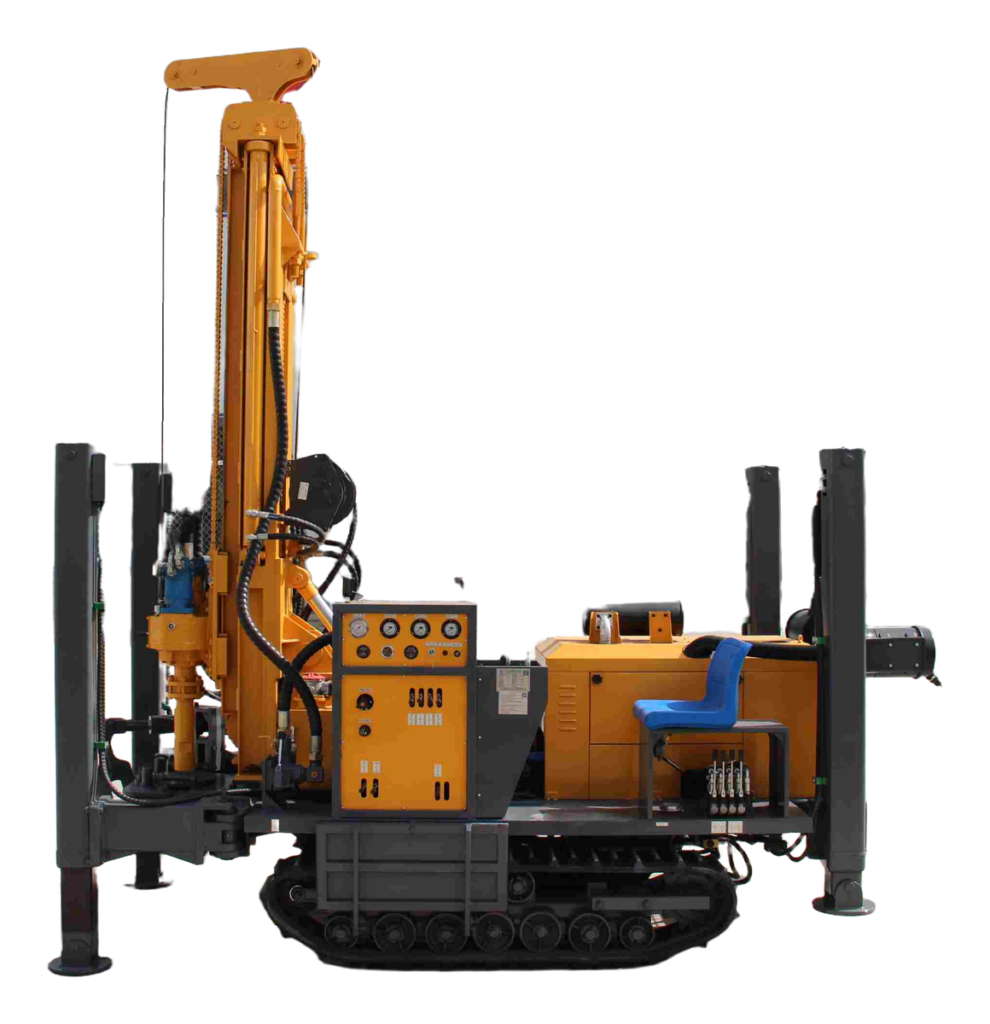
A useful rig comparison starts with the well you need to build. Before comparing models, prepare a short project brief covering the location, expected ground conditions, target depth, borehole diameter and proposed casing. Those details help turn a broad equipment search into a realistic technical discussion.
Start with the hole and the ground
State both the drilled hole diameter and the intended casing size. They are different measurements and both matter to the equipment layout. If nearby borehole logs or geological reports are available, include them. Describe the expected sequence of soil, gravel, weathered rock and competent rock, rather than giving only a single label such as “hard ground.”
Ask which drilling method suits that sequence. Air-powered down-the-hole drilling uses a hammer at the bottom of the hole. Mud rotary uses circulating drilling fluid. Some rigs support more than one method, but the required compressor, pump and tools must be included in the proposed configuration.
Read beyond the depth figure
A model name or headline depth is only the starting point. Compare the manufacturer’s specified operating configuration, rotary torque and speed, pullback, feed travel and pipe-handling arrangement. Ask what drill-pipe size and drilling method were used for the stated capacity. Put the answers beside each other so you compare like with like.
Also review the physical work around the rig. Can the mast and handling equipment accommodate the planned pipe lengths? Is there space for casing, tool changes and support equipment? These questions are particularly useful when the site has limited access or a small working area.
Compare the complete package
For an air-drilling proposal, request the compressor’s delivered airflow at the intended working pressure and the matching hammer specification. For a mud-drilling proposal, review the pump and the proposed fluid-handling arrangement. List drill pipes, bits, adapters, casing tools and essential spares separately so that omissions are visible.
Make the quotation easy to assess
Send every supplier the same project brief and ask for a clear equipment list. Include transport restrictions, available power, site altitude and ambient temperatures. Request the applicable manuals and a written explanation of the proposed configuration. A complete, comparable quotation is more useful than selecting a machine by maximum depth or engine power alone.