
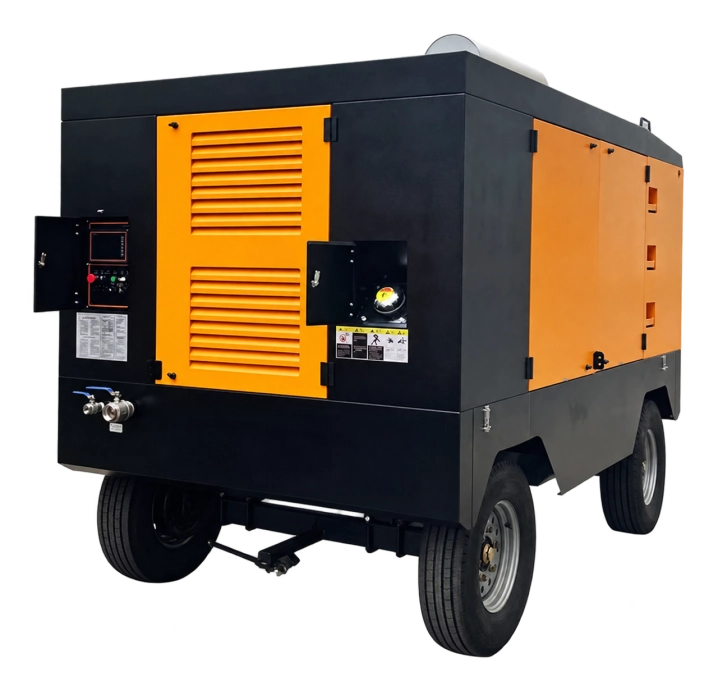
A DTH drilling package works as a connected system. The compressor supplies the air, the drill string carries it, and the hammer and bit turn that supply into drilling action. Matching these components begins with the required hole diameter and the actual hammer specification.
Keep pressure and airflow together
Working pressure and delivered airflow describe different parts of compressor performance. When comparing units, record the available flow at the intended pressure, rather than comparing the largest flow figure from one brochure with the highest pressure from another. Some compressors offer adjustable pressure and flow, so the relevant operating point must be clear.
Check the units and reference conditions too. Free air delivery, or FAD, expresses delivered air relative to stated inlet conditions. It should not be confused with the volume of compressed air inside the hose. Ask the supplier to use a consistent basis when comparing compressor output with the hammer’s air requirement.
Use the hammer’s own operating data
Identify the exact hammer model, compatible bit shank and intended bit diameter. Then review its manufacturer’s air-consumption and pressure information. Hole cleaning also needs adequate air: a hammer that operates does not by itself prove that the entire hole will be flushed effectively.
Depth, hole size and conditions in the hole affect the selection. Water and cuttings can increase back pressure, reducing the pressure difference available to operate a pneumatic hammer. Use the proposed drilling conditions when discussing the package; avoid selecting the compressor solely from a broad depth label.
Check every connection in the string
List the rotary-head connection, adapters, drill-pipe threads, hammer connection and bit shank. Matching nominal sizes alone is not enough information to approve an assembly. Request a component list that identifies the actual connections and the manufacturer’s compatibility requirements. Include the handling and breakout equipment needed for the selected tools.
Account for the site and daily use
Provide the site’s altitude and temperature range. Ambient conditions can affect compressor capacity, cooling and the available power, so a catalogue rating should be checked against the proposed location. Also identify the required air-line arrangement before finalising the package.
Keep drill-pipe interiors and connections clean during storage and handling, and inspect air hoses as directed by the equipment manuals. Dirt entering the string can reach the hammer. A practical purchase brief includes the complete tool list, compressor operating data, site conditions and maintenance documentation, giving the supplier enough information to review the system as a whole.