
Core drilling rig depth capacity applies to a specified drill string and operating conditions, not to every core diameter or hole. Compare the named rod system, hole geometry, pulling and holding limits, rotation requirements and support equipment. Keep maximum single-hole depth separate from total program metres.
Keep each depth rating beside its named drill string
The dragondrill DR-1000X product page lists different capacities for BTW, NTW and HTW drill strings. It explicitly states that depth figures apply to the named specifications. See the DR-1000X capacity table.
| Named drill string | Published DR-1000X depth |
|---|---|
| BTW | 1,200 m |
| NTW | 1,000 m |
| HTW | 800 m |
Use these values as catalogue ratings for the stated model, not project guarantees. Ask which rod dimensions, material, connections and condition were assumed. Confirm hole direction, expected ground, circulation and downhole tools before accepting a capacity recommendation.
A proposal that changes the rod system must also revisit the depth assessment. Do not use a capacity tied to one designation as proof for a different string that looks similar.
If the offer includes a project-specific performance commitment, agree its operating conditions and acceptance method separately. Record the stated conditions and evidence required to assess that commitment; the catalogue depth table alone does not establish it.
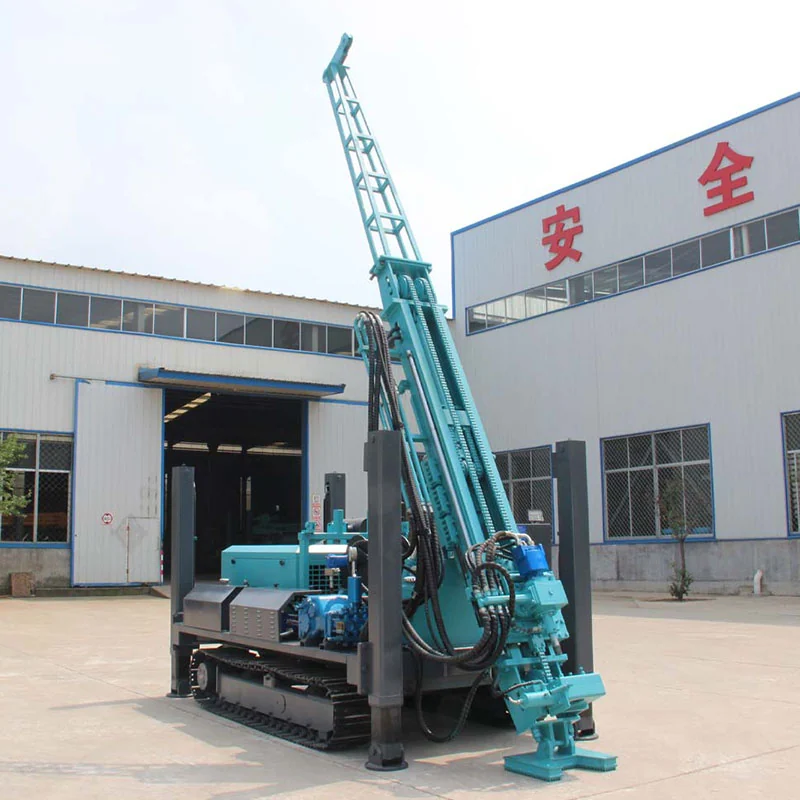
Check the rod construction and rating assumptions
Record the exact rod construction alongside every depth figure. Wall design, dimensions, connections and condition belong to the rating basis; a capacity quoted for one rod construction must not be assigned to another without a new assessment.
Request the manufacturer’s complete rating basis rather than only the largest number in a brochure. Identify whether the quoted string is new or used, how its condition is assessed and what operating restrictions apply. Ask how inclination, deviation, friction and circulation affect the proposed hole.
Do not turn differences between published rod-system ratings into a fixed allowance for another drill string or rig. For a DR-1000X or any other proposed rig, obtain a configuration-specific assessment for the intended equipment and hole.
Separate main-hoist, feed-pull and rod-handling ratings
List main-hoist capacity, feed pull force and rod-pull length as separate fields. They describe different functions: retain the units, mechanism and operating conditions associated with each rating instead of treating them as interchangeable limits.
Ask which device carries the string in each operating step and which components limit the load. Compare the head, chuck, clamps, hoist, mast and drill-string limits for the intended procedure. A force rating does not independently establish the depth that can be drilled or a stuck-string recovery limit.
Review the actual rod lengths and handling arrangement. A rod-pull length is not wireline cable capacity, total borehole depth or permission to combine handling configurations.
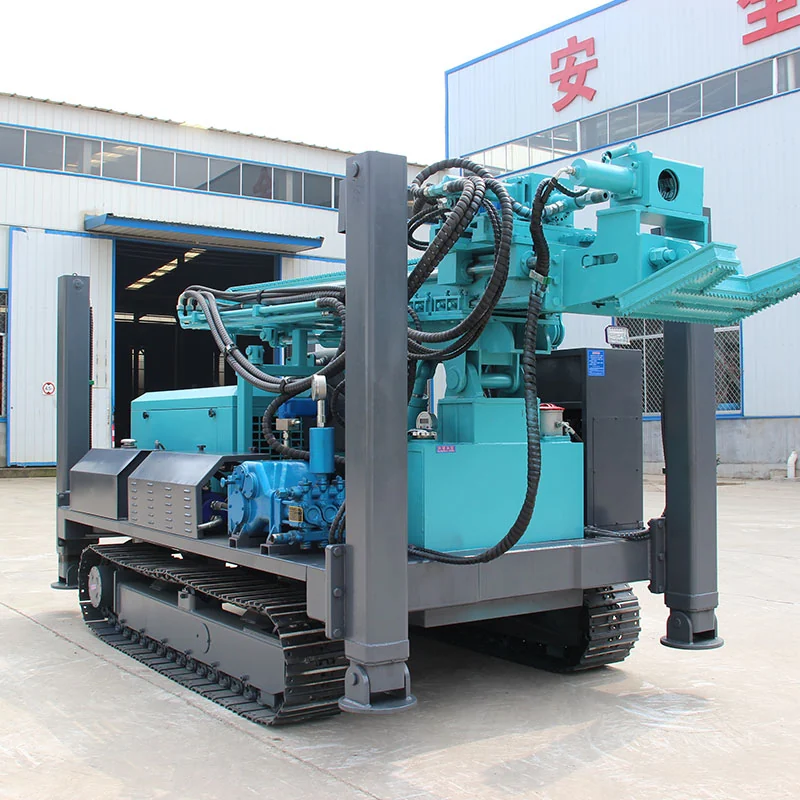
Verify tool-system compatibility and torque requirements
The DR-1000X catalogue lists maximum torque of 2,600 N·m. That figure does not define every drill-rod connection’s allowable torque or establish the torque available at every rotation speed. Check the DR-1000X rotation specification.
Obtain the torque-speed information for the proposed rotary head and the applicable rod and tooling limits. Identify the chuck, clamp, drive sub, rods, barrel, bit and retrieval components as one assembly. Keep the operating instructions for each retained component with the purchase review.
Use the core drilling tools compatibility checklist to record the interfaces. A nominal diameter or thread that can be started by hand is not a complete compatibility check.
Compare suppliers against one hole schedule and orientation
Inclination belongs in the equipment brief. Request the permitted operating-angle range for the actual inner-tube and rod-handling arrangements. A handling envelope does not, by itself, establish a general depth derating rule.
List each planned hole or hole class with target depth, inclination, diameter sequence, expected formation, casing and sampling requirements. State the angle convention and separate total program metres from the deepest individual hole. Ask suppliers to identify conditions or exclusions against each row.
For an inclined hole, distinguish measured hole length along the hole from vertical depth. State which quantity the target and the supplier’s assessment refer to, together with the inclination reference convention.
Capacity clarification sheet
| Review field | Buyer input | Supplier response |
|---|---|---|
| Hole requirement | Hole ID, measured length, vertical depth where required, inclination convention and diameter sequence. | Configuration assessed for that hole and any conditional or unresolved inputs. |
| Drill string and tools | Named rod system, dimensions, connections, condition and retained tools. | Rating basis, approved assembly and applicable restrictions. |
| Ground and circulation | Available logs, anticipated difficulties, fluid arrangements and unknowns. | Assumptions, limitations and further information needed. |
| Handling and site resources | Rod lengths, lifting/handling arrangement, access and available support equipment. | Applicable handling limits and required buyer provisions. |
| Performance commitment | Any required project-specific outcome and proposed acceptance requirement. | Written conditions, acceptance method and supporting evidence, if agreed. |
Give each response a status of confirmed, conditional or unresolved. Keep the dated specification revision with the completed sheet so a change in string, geometry or configuration triggers a review of the affected response.
Send that schedule to request a core drilling capacity review. Include existing rods and tools, site resources and the sampling brief. The mineral exploration RFQ guide provides the procurement structure.
Frequently asked questions
What does 1,000 m core drilling rig depth capacity mean for different rod sizes?
It means only what the manufacturer states for a named string and conditions. The DR-1000X page lists BTW at 1,200 m, NTW at 1,000 m and HTW at 800 m. Confirm the actual rod specification and project assumptions before choosing a configuration.
Can I use the largest published core-rig depth for a larger core diameter?
No. Retain the drill-string designation and conditions associated with each rating. A different barrel, rod construction or diameter requires a new system review; one maximum is not interchangeable across the capacity table.
Is main-hoist capacity the same as a core drilling rig’s pull force?
Not necessarily. Main-hoist capacity and feed pull force describe different mechanisms and operating steps. Identify what each rating applies to, then check the relevant equipment and drill-string limits rather than substituting one figure for the other.
Should an exploration RFQ specify total programme metres or maximum hole depth?
Specify both, in separate fields. Total metres describe the work program, while each hole’s depth and geometry support the capacity review. Include rod system, casing, inclination, sample requirements and ground information for each hole class.