
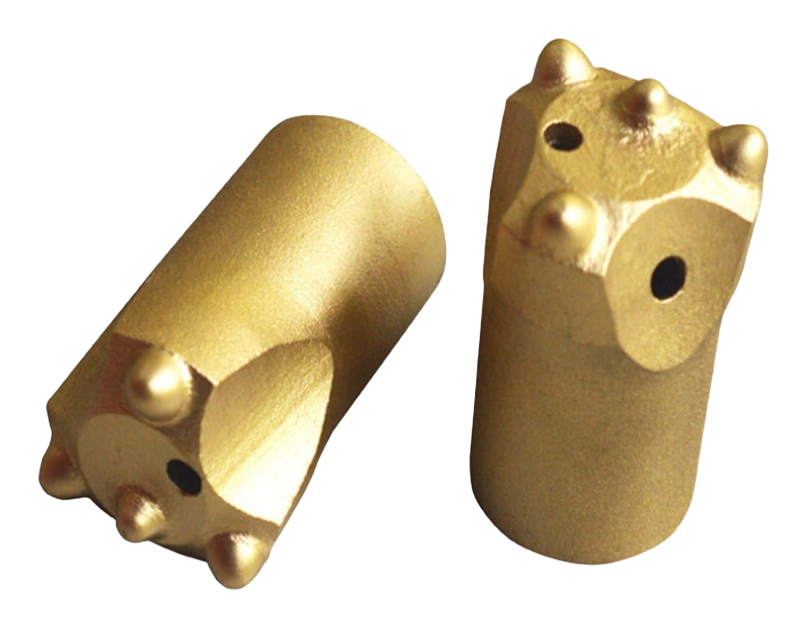
Ball Tooth DTH Drill Bit
The ball tooth DTH drill bit uses rounded cutting buttons on the head, with flushing openings that form part of the rock-drilling air path.
The ball tooth DTH drill bit is a button-type rock-drilling tool. Its rounded cutting buttons project from the head, while openings in the face provide a route for flushing at the cutting end.
Ball tooth DTH drill bit cutting face
The rounded buttons are the working contacts against the rock. In a DTH assembly, the hammer supplies percussion and the rotating drill string changes where those contacts strike. The bit body supports the cutting elements and connects the head to the tool behind it.
Button shape is one part of bit selection. Rounded and more pointed button profiles are used in different drilling conditions. Compare the rock's abrasiveness and fracture conditions together with the complete face design, rather than selecting a tool by button shape alone.
Diameter and hammer interface
Start with the required bore diameter, then identify the matching hammer interface. A ball tooth DTH drill bit must fit the intended chuck and retaining arrangement. Two bits with the same cutting diameter may use different shanks.
The Epiroc DTH bit catalogue separates bit diameter, shank, face layout, button arrangement and flushing holes. Those are useful fields to compare when specifying a replacement cutting tool.
Flushing and wear checks
Flushing moves broken material away from the buttons. The bit openings work with the hammer and the rest of the air system; a clear opening on the head cannot compensate for an unsuitable air package.
When inspecting a used bit, look at the cutting face, gauge area and connection as separate areas. A replacement needs the correct cutting size and interface, while the condition of the existing tool can help describe the wear pattern encountered in service.
Ball tooth DTH drill bit questions
Is the bit itself the percussion mechanism?
No. The water well DTH hammer supplies the impacts; the bit presents the buttons to the formation.
What information helps select the next bit?
Use the existing hammer identification, cutting diameter, connection details and rock description. Compare other drilling tools and accessories where a different cutting method is required.