
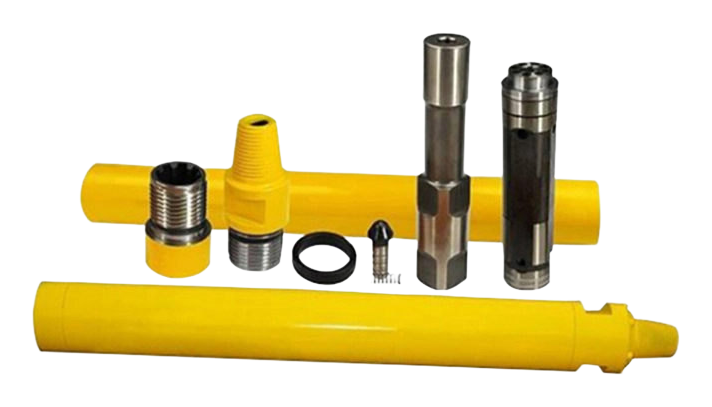
Water Well DTH Hammer
For down-the-hole drilling
The water well DTH hammer delivers percussion behind a matching rock-drilling bit, with the drill string supplying rotation, feed and compressed air.
The water well DTH hammer is a percussion tool for pneumatic rock drilling. It sits at the lower end of the drill string, behind the bit, so the impact mechanism follows the cutting tool down the bore.
Water well DTH hammer and bit roles
The hammer provides repeated impacts and the bit transfers those impacts to the formation. Compressed air reaches the tool through the drill pipe, and discharged air supports flushing at the cutting face. The surface rotation unit turns the connected drill string.
The range includes cylindrical hammer bodies and separate working components. When replacing a tool, distinguish the complete hammer from an individual piston, chuck, seal or cutting bit. Those parts have different interfaces and are selected for a particular assembly.
Match the air package to the bore
A water well DTH hammer is selected with the bit diameter and compressor performance in mind. Pressure and airflow are separate requirements. The drilling system also needs enough flushing capability to carry cuttings away from the bottom of the hole.
Water entering the bore can change the conditions experienced by the air-driven tool. Include the expected wet or dry drilling conditions when comparing hammer and compressor configurations; a surface pressure figure does not describe the whole downhole operating condition.
Connections and working components
Match the rear connection to the drill pipe and the bit shank to the hammer's chuck. Keep these matches separate from the nominal hole diameter. Similar outer dimensions do not establish interchangeable threads or internal components.
Use the selected model's instructions for lubrication, assembly and inspection. The DTH hammer operating-principle guide explains the relationship between the hammer, bit, drill pipes and flushing air.
Water well DTH hammer questions
Does a hammer create water in the formation?
No. Its job is to drill rock. The well location, aquifer conditions and completed-well testing determine the water-supply assessment.
Which companion tools are relevant?
Compare button-type DTH bits and the 89 mm DTH drill rod as separate components. Choose their actual interfaces to match the selected hammer.